
New Castle, Indiana
Emergency Water Extraction and Water Removal in New Castle
If there is water on the floor while you are reading this, the priority is getting it out and keeping people away from anything electrical. Everything else, including how it started, can wait a few minutes.
First minutes: what actually matters
Shut off the water supply if the source is a line or an appliance and the valve is somewhere you can reach dry. Keep off wet flooring near outlets, cords, or a submerged pump. Move what lifts easily, especially anything sitting flat on a wet floor, and leave the rest. Do not start pulling up flooring or cutting into anything yet: what comes out is a decision made from moisture readings, not from appearances.
How water removal is done
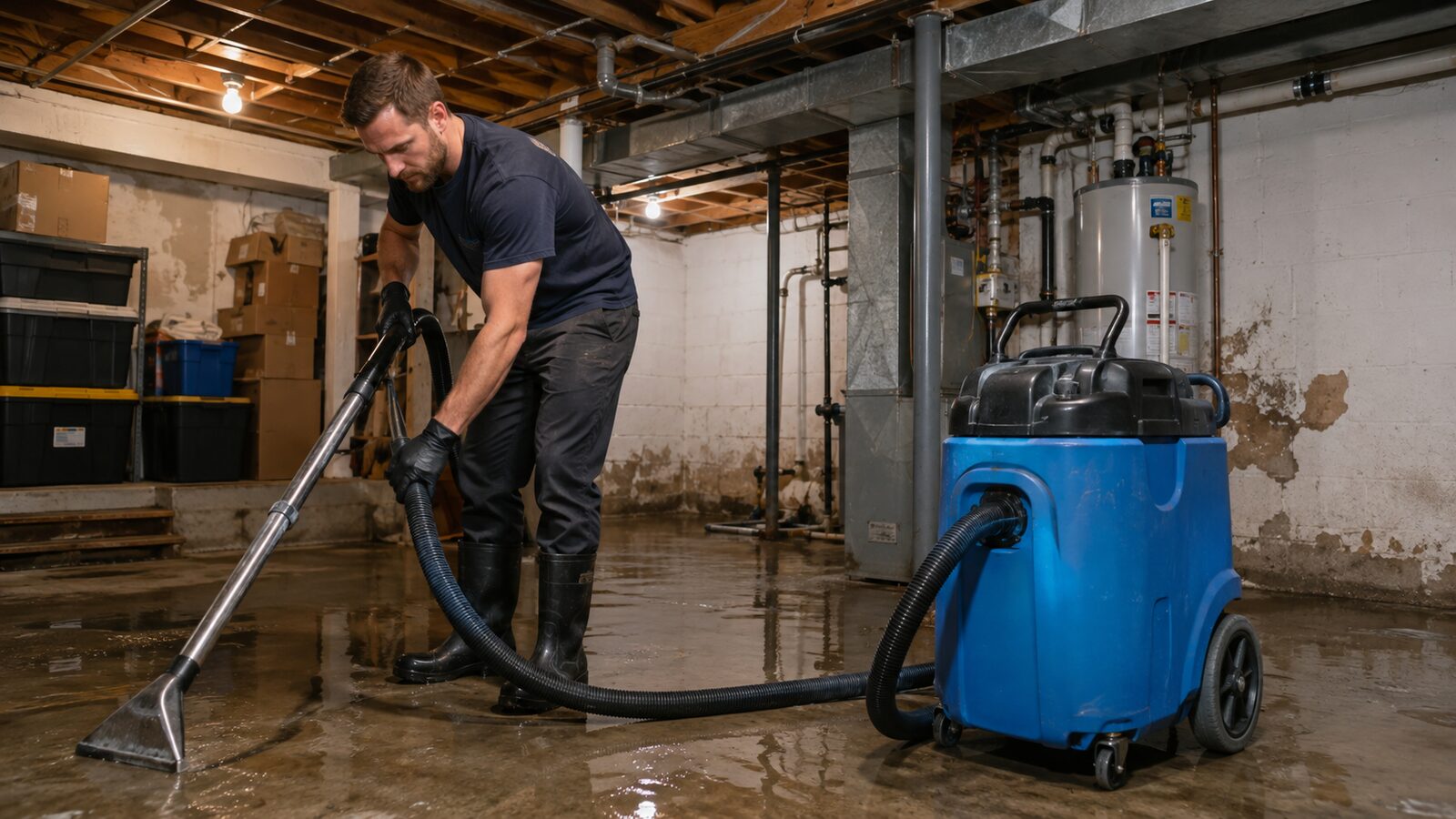
Water removal and water extraction describe the same job at different depths. Anything deep enough to wade through gets pumped. What is left in the flooring, the pad underneath, and the low corners gets pulled with extraction equipment that draws water out of material rather than off the surface. On a well or septic property we ask about the pump and the tank location before anything is energized near the wet area.
Where water hides after the floor looks clear
- Under carpet pad and vinyl, where surface mopping never reaches.
- Inside wall cavities, wicking upward from the bottom plate.
- In the subfloor, especially where two rooms meet at a threshold.
- Down through floor registers into ductwork and the crawl space below.
Removal is the start, not the finish
Getting the water out stops the spread; it does not make the structure dry. Materials that took on water hold it for days, which is why the drying stage and the readings that go with it are a separate phase, covered on our restoration and mitigation process page. If the water came in under the house rather than into a room, start with standing water in a crawl space instead.
What to do before help arrives
- Cut power to the affected area at the panel if you can do that without standing in water.
- Shut the supply valve if a pipe or appliance is the source; if the valve is in the wet area, leave it and say so on the call.
- Get people and pets out of the room, particularly if the water is cloudy or smells.
Our approach
Getting water out of your home or building
Make it safe
Electrical hazards and contamination get identified before equipment goes in, whether the property is in town or on a county road.
Pump, then extract
Standing depth is pumped out, then extraction pulls the water held in flooring, pad, and the low points that hold it longest.
Read and hand off to drying
We take baseline moisture readings so the drying phase starts from measured numbers rather than a guess about how wet things are.
Water on the floor right now?
Call and describe the room and the depth; we will tell you what to do in the meantime.
Questions about water removal
Can I just use my own shop vacuum?
For a small spill on a hard floor, often yes. A shop vacuum pulls surface water, but it does not draw water out of carpet pad, subfloor, or a wall cavity, which is where the damage develops. If the water covered more than a small area or reached a wall, extraction equipment and readings are what prevent a hidden problem later.
Is water removal the same as water extraction?
They are the same job described two ways. Removal usually refers to getting the bulk volume out, and extraction to pulling what remains in materials. We handle both in one visit, so you do not need to work out which one to ask for when you call.
What if the water is already gone by the time you arrive?
That happens often, especially when water drained away under the house or through a floor drain. The visit then focuses on readings: framing, subfloor, and wall bases tell us whether anything is still holding water. If the numbers are normal, we say so and there is nothing further to do.