
New Castle, Indiana
Roof Leak Water Damage in New Castle
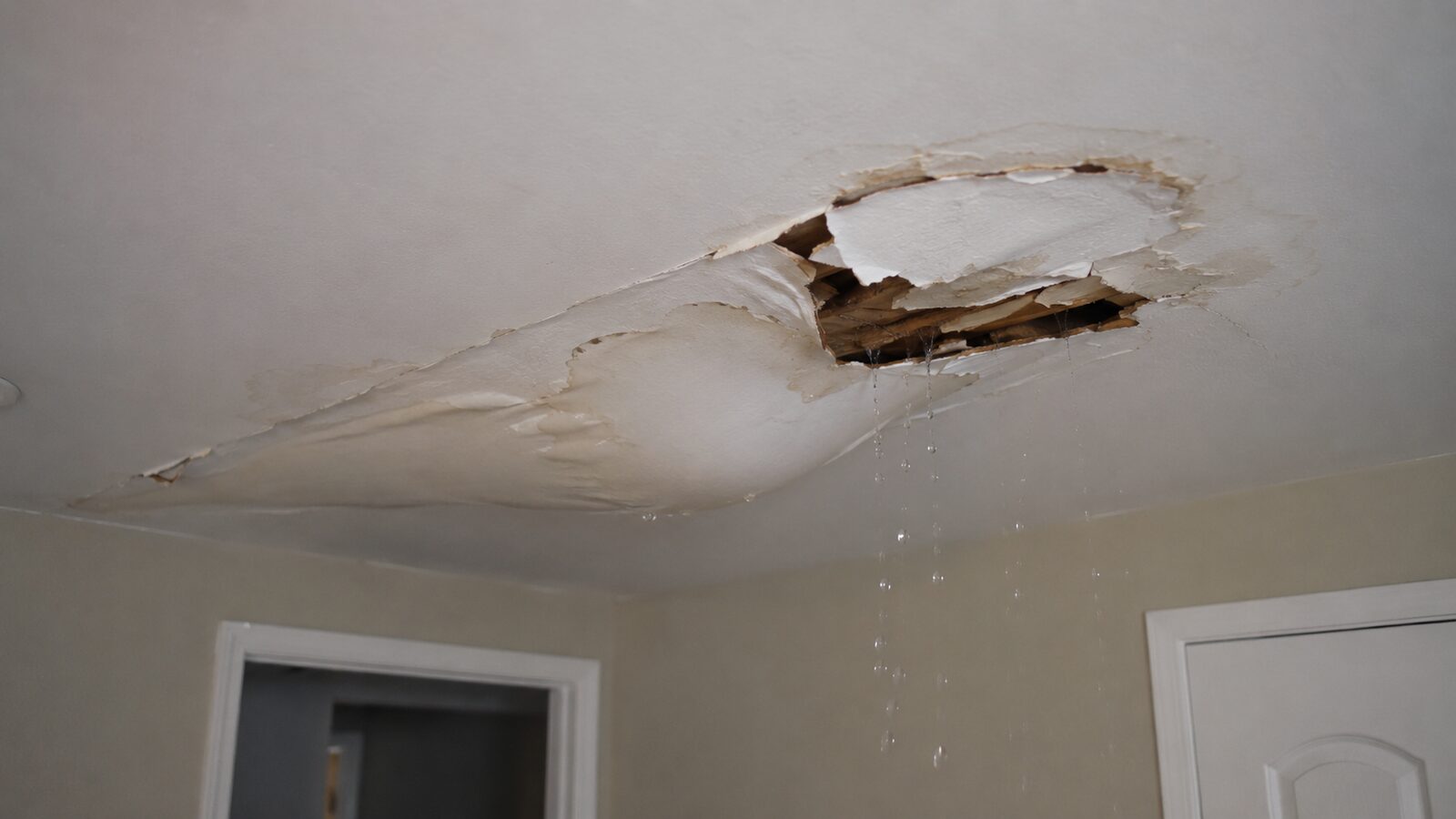
A stain on the ceiling is the end of the story, not the beginning. Water came through the roof deck, crossed the attic, soaked insulation, and only then showed itself downstairs, usually a good distance from where it got in.
The stain is downhill from the leak
Water landing on the top side of a ceiling runs along the framing until it finds a seam, a fixture cutout, or a low spot. That means the wet patch you can see rarely sits under the hole. Finding the entry point takes a look in the attic and readings across the ceiling plane, not a guess based on where the paint is discolored.
What the cleanup involves
Wet insulation is the first thing to address, because it holds water directly against the ceiling and loses most of its value once it has been soaked and compressed. From there we check the ceiling material itself, the top plates of the walls below, and anything that ran down inside a wall cavity. A ceiling that is sagging or holding a visible bulge gets relieved deliberately rather than left to let go on its own.
What we check after a roof leak
- Insulation depth and saturation across the affected bays.
- The underside of the roof deck and any staining on rafters or trusses.
- Ceiling drywall or plaster, including whether fasteners have pulled.
- Wall cavities directly below, where water often runs unseen.
- Light fixtures and boxes in the wet area, which stay off until checked.
Roofs around here take a specific kind of beating
Straight-line summer storms lift shingles and drive rain sideways under them, and the same wind loosens fasteners on the metal roofing that is common on rural buildings, shops, and older farmhouses. In winter, ice at the eaves backs water up under the courses. Buildings that are not lived in daily are the ones where a small leak runs through several storms before anyone notices the ceiling.
Roof repair is separate work; our part is the water inside. Once the roof is covered or repaired, the ceiling and framing still need the drying and mitigation process. Where wind-driven rain also came in at ground level, see storm water cleanup.
What to do before help arrives
- Keep clear of a bulging ceiling and move anything valuable out from under it.
- Turn off the circuit for lights and fans in the wet area rather than testing whether they still work.
- Put a container under an active drip, and photograph the ceiling and attic before anything is removed.
Our approach
Working a leak from the ceiling upward
Find the path
We look above the ceiling and take readings across it to work out where water entered and how far it traveled.
Remove what is holding water
Saturated insulation and failed ceiling material come out so the structure above can actually dry.
Dry before closing up
Framing and remaining ceiling are dried and re-read, so nothing gets sealed behind new drywall while still wet.
Water coming through the ceiling?
Call and describe the stain, the room, and whether the roof has been covered yet.
Roof leak questions
The ceiling stain dried on its own. Do I still need someone to look?
A surface that dried does not tell you about the insulation above it, which can stay wet for weeks in an enclosed attic bay. That is where odor and mold problems start. A reading through the ceiling and a look above it settles the question quickly, and if everything reads normal we will tell you there is nothing to do.
Do you repair the roof too?
No, roofing is separate work and needs a roofer. We deal with what the water did inside: insulation, ceiling, framing, and anything below. If the roof is still open, covering it is the first priority, because drying an interior while water is still arriving does not get anywhere.
How can water show up in a room nowhere near the roof damage?
Because it travels along the top of the ceiling and inside wall cavities before it finds a way through. Following framing, water can move a considerable distance from the entry point. That is exactly why we map with readings rather than assuming the leak is directly above the stain.