
New Castle, Indiana
Flooded Basement Cleanup in New Castle
Not every house here has a basement, but the ones that do are usually older, and their basements are where the furnace, the water heater, the panel, and forty years of stored belongings all sit together. Water down there reaches expensive things quickly.
Why a basement holds water longer than any other room
Below grade, there is nowhere lower for water to drain to and very little natural air exchange to carry moisture away. Block walls absorb water and release it slowly for days afterward. Add a concrete floor that stays cold and you have a space that reads damp long after the standing water has gone, which is exactly the condition that produces a musty smell through the whole house.
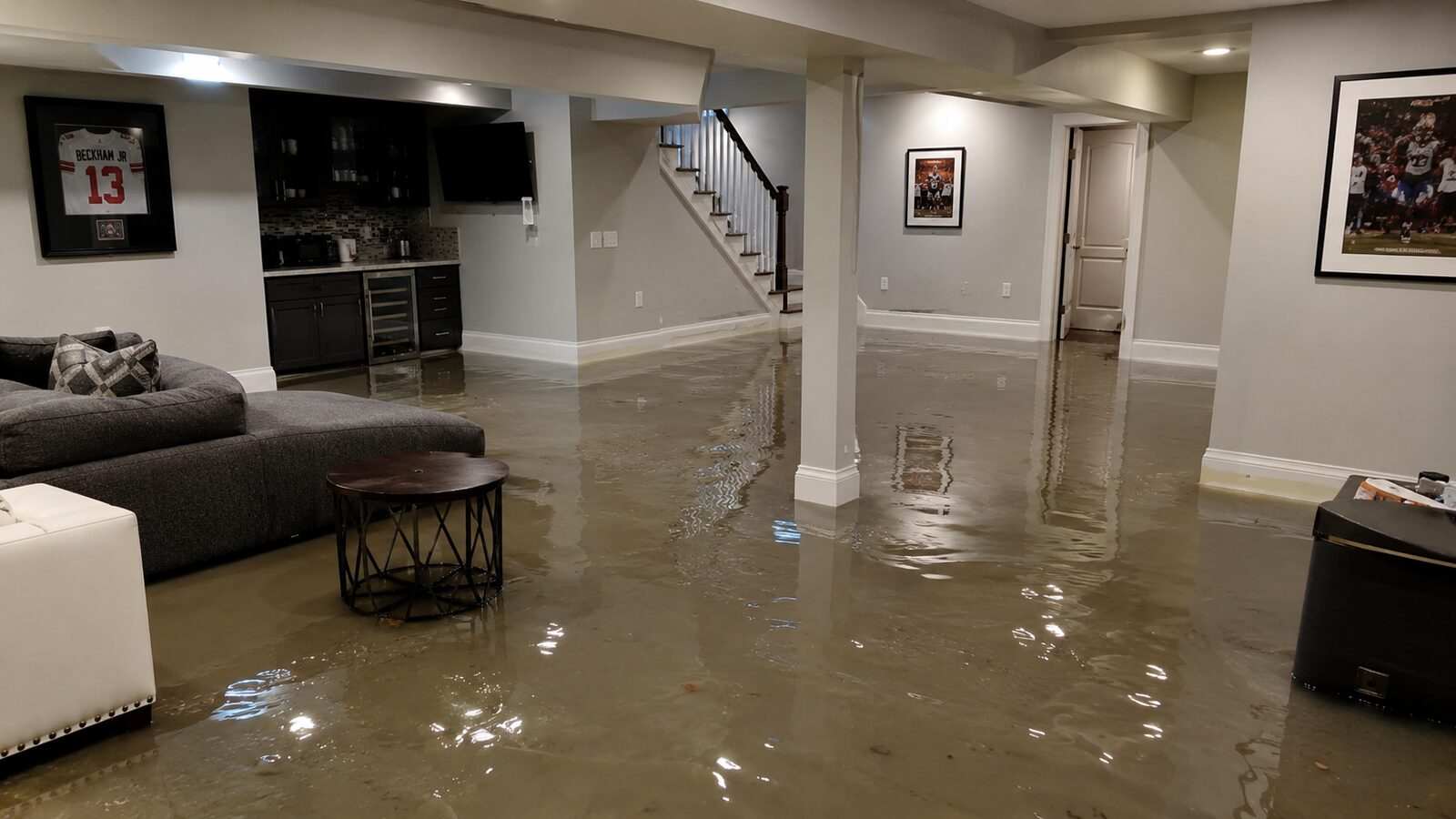
What basement cleanup involves
Pumping comes first, and the discharge has to go somewhere that will not run straight back toward the foundation. Once the floor is clear, the sorting begins: what was sitting directly on the slab, what was on shelving, and what is porous enough to have wicked water upward. Mechanical equipment down there gets checked but not restarted on assumption, since a furnace or water heater that was partly submerged is a job for the appropriate trade.
The parts people forget to check
- Drywall and paneling at the base of finished walls, where water climbs behind the surface.
- Wall insulation behind that paneling, which stays wet after the face feels dry.
- Cardboard boxes and paper on the floor, which act like a wick.
- The bottom of stair stringers and any wood in contact with the slab.
- The sump pit itself, including whether the pump ran and whether the check valve held.
Why it comes back to the same corner
Basement water is rarely random. It arrives at the low point, at a cracked block joint, at a window well that fills faster than it drains, or through the floor where hydrostatic pressure pushes it up. Around New Castle the common trigger is a long soaking rain rather than a single downpour: the ground stays saturated, pressure against the wall stays high, and water finds the same weak point it found last year.
Sorting out that cause is separate from the cleanup, but worth knowing before you refinish anything. If the water came up through a floor drain, treat it as contaminated water. Where the house has a crawl space section as well, see water under the house, since the two often flood together.
What to do before help arrives
- Do not walk into a flooded basement if the panel, furnace, or any outlet is at or below water level.
- Leave the sump pump alone if it is submerged and you cannot reach its circuit safely from upstairs.
- If you can safely reach the stairs, lift what is on the bottom steps and photograph the space before anything moves.
Our approach
Clearing and drying a below-grade space
Pump and clear the floor
Standing water is removed and discharged away from the foundation so it does not simply return.
Open what is holding water
Wet base material and insulation come out where readings show they cannot dry inside the wall.
Dehumidify and monitor
Below-grade drying leans on dehumidification more than airflow, with readings on block and slab tracked until they settle.
Water in the basement?
Call before moving belongings; what you photograph first is easier to account for later.
Basement flooding questions
What gets thrown out and what can be saved?
Hard items usually clean up: tools, metal shelving, plastic totes, furniture with solid wood frames. Cardboard, paper, upholstered pieces that sat in the water, and mattresses generally do not. Anything with sentimental value gets set aside for you to decide rather than binned by us. We sort with you rather than for you.
My sump pump ran the whole time and it still flooded. Why?
A pump can be working and still be outmatched, either because the volume exceeded what it moves per minute, the discharge line was blocked or frozen, or the power dropped during the storm. It is worth checking the check valve and the discharge run once things are dry. That is a separate repair, but we will tell you what we noticed at the pit.
How do you dry a basement without heating the whole house?
Mostly with dehumidification rather than heat. Below grade, pulling moisture out of the air lets block and slab release what they absorbed, and air movers keep that air circulating against surfaces. It runs for several days in most cases, and we re-read the walls each visit rather than shutting equipment off when the floor looks dry.