
New Castle, Indiana
Water Damage Restoration in New Castle
Once the water is gone, the real question is what it left behind. This page explains the mitigation work in order: reading the structure, drying it, checking that it stayed dry, and knowing when repairs can start.
Mitigation before repair
Mitigation is everything done to stop the damage getting worse and return the building to a normal moisture level. Repair is what puts materials back afterward. Doing them in the wrong order is the most expensive mistake in this work: new flooring laid over a subfloor that still holds water fails, and drywall closed up over a damp stud cavity causes a smell that no amount of paint fixes.
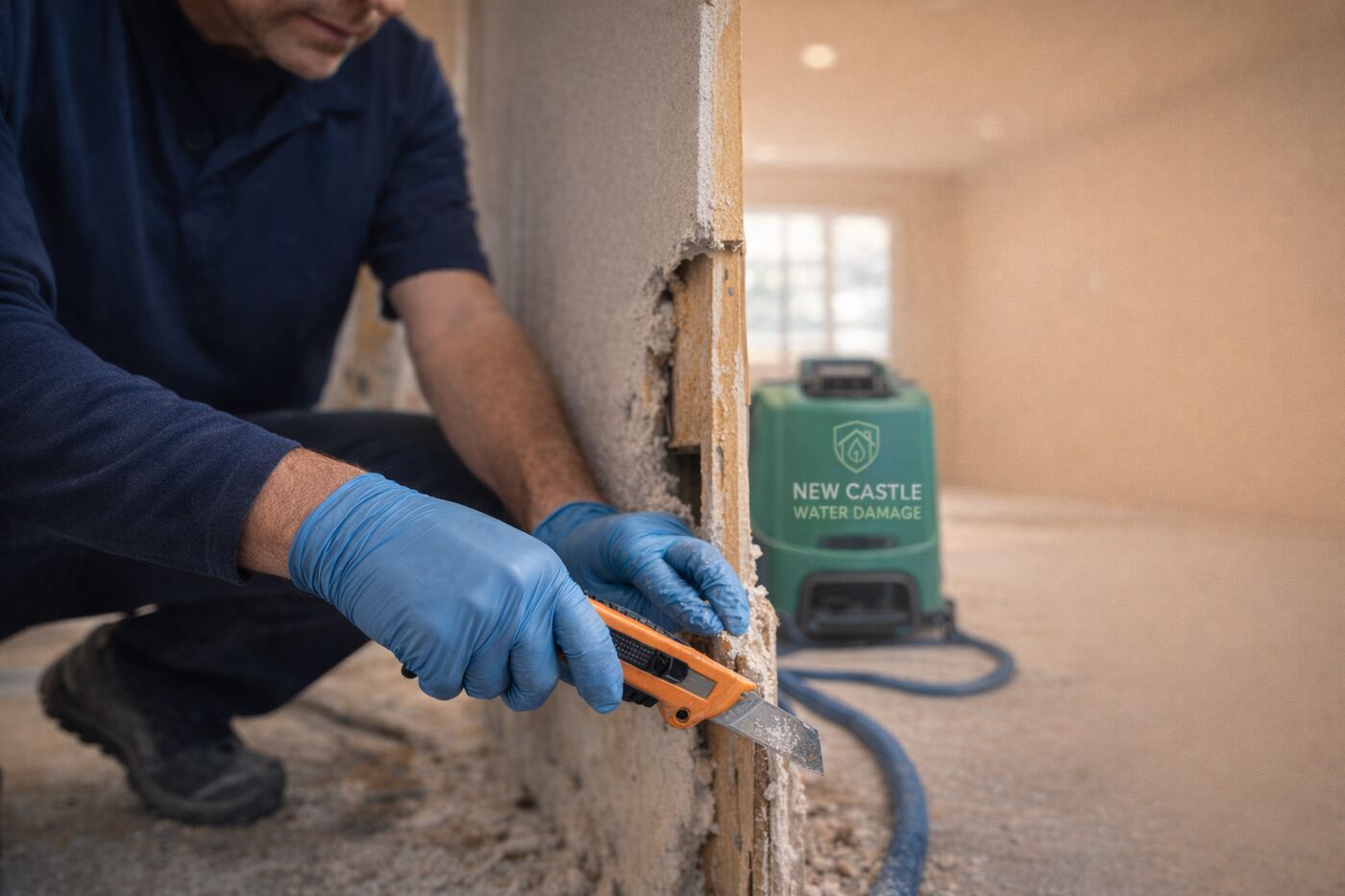
What the mitigation work involves
We start by mapping how far the water traveled, which is almost always further than the wet patch on the floor suggests. Readings in framing, subfloor, and wall bases set a baseline. Then air movers and dehumidifiers are placed for the size and layout of the space, and the material that cannot return to a normal reading comes out. On rural property, drying an unheated outbuilding or a room over a crawl space needs a different equipment setup than a conditioned room in town.
What we document as we go
- Moisture readings at fixed points, taken again on each visit.
- Which materials were removed and why they could not be dried.
- Equipment placed, and any changes made as the readings moved.
- Photographs of affected areas before work started.
Keeping that record is useful whatever you decide to do about a claim. We can describe what was found and what was done; we do not comment on what a policy covers, and we do not deal with an insurer on your behalf unless you specifically arrange it.
How New Castle property shapes the drying plan
A good share of local homes sit over a crawl space, which means the floor system is drying from both sides and needs readings taken underneath as well as in the room. Older houses in town often have plaster, which holds water differently than modern drywall. Buildings on acreage may not be heated evenly, and a cold room dries slowly no matter how much air is moving through it.
If water is still standing when you read this, start with getting standing water out fast. If it came in from below the floor, water under the house covers that situation directly.
What to do before help arrives
- Leave wet material in place rather than tearing it out; what stays and what goes is decided from readings.
- Photograph the affected rooms while they are still as you found them.
- Keep heat and air moving normally if it is safe to do so, and mention any room you cannot heat when you call.
Our approach
How a drying plan is built and closed out
Map the moisture
Readings at set points show how far the water moved, including under the floor and inside wall cavities.
Dry to a target
Equipment is sized to the space and adjusted as numbers change, rather than left in one arrangement and forgotten.
Confirm and release
When readings hold at a normal level across repeat visits, the drying phase closes and repairs can safely begin.
Not sure whether it dried properly?
A reading takes minutes and settles the question before you put materials back.
Questions about restoration and drying
How long does drying usually take?
Often several days, and longer where heavy framing, plaster, or an unheated space is involved. The honest answer is that it takes as long as the readings say. We check on a schedule and adjust equipment rather than committing to a finish date on day one, and we tell you at each visit where the numbers stand.
Do you handle the repairs after drying?
Mitigation and drying are what we describe on this site. Reinstating flooring, drywall, trim, and paint is separate work, and we will tell you plainly what still needs doing and what condition the structure is in when we finish. That way whoever handles the rebuild is starting from a dry, documented baseline.
Do I call you or my insurance company first?
Either order works, and many people call both within the same hour. What helps most is documentation: photographs taken before anything is moved, and a record of readings and work performed. We keep that record and can provide it. We do not advise on what your policy covers or what an adjuster will decide.